

WTF?
There’s a science behind why we do what we do.
At any given moment, we could be doing countless different things. So why do we choose one behaviour over another? Behavioural science helps us understand what influences our choices, why behaviours happen and how we can use that understanding to solve problems and create positive change.
Behaviour is influenced by its consequences. What happens after we do something – whether that’s getting attention, gaining access to something, escaping an unpleasant task or experiencing a sense of achievement – can influence how likely we are to do it again.

Many options

We choose what works

The payoff
When we identify what a behaviour achieves for a person, we can develop proactive strategies that meet the same need in a more positive, constructive way.
Identify the behaviour
Understand the function
Create proactive strategies
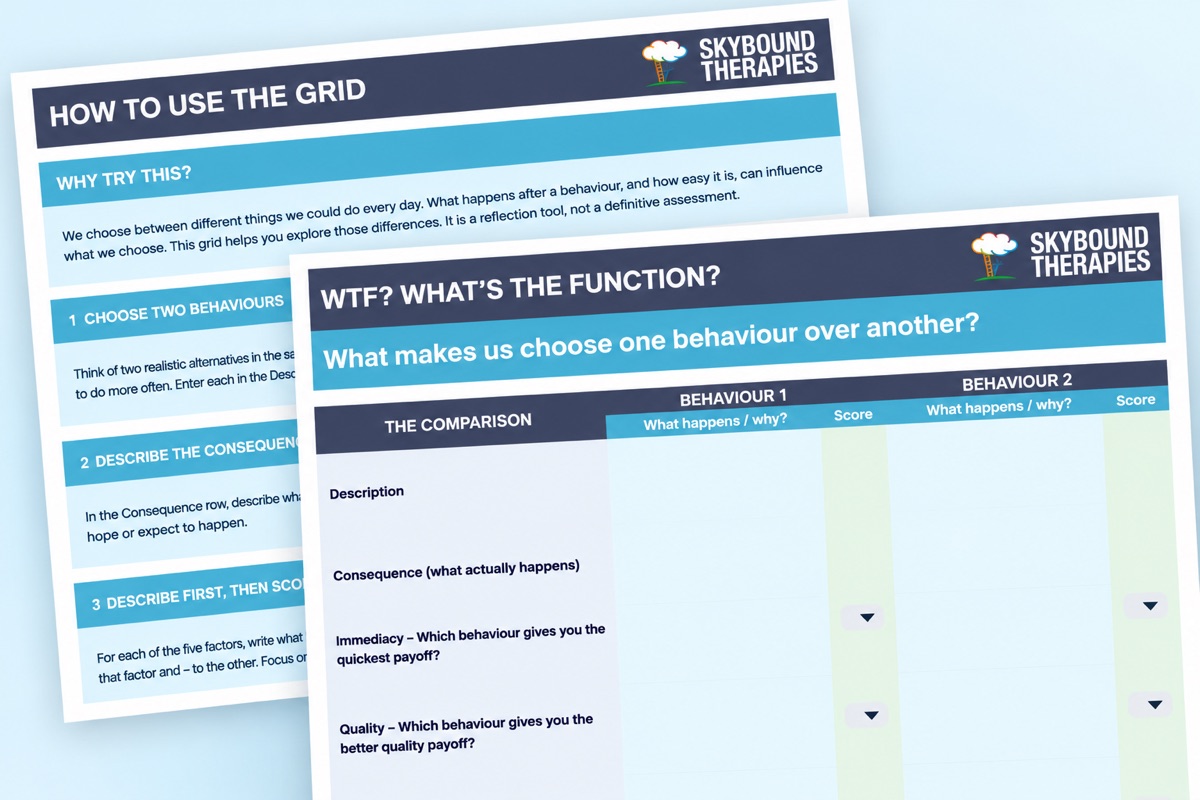
Try it for yourself
Every day, we make choices between different behaviours. Our Matching Law Grid is a simple, practical tool to help you explore what might be influencing those choices. Compare two behaviours, consider their consequences and discover how small changes could make a different behaviour more appealing.
Download your own copy of the Matching Law Grid. Choose the format that suits you best.
Behavioural science is everywhere
The same principles influence all of us, in different settings and at different stages of life. Their applications extend far beyond any one profession or area of expertise.

Learning disabilities
Using behavioural science to understand behaviour, develop supportive environments and build skills that improve quality of life.
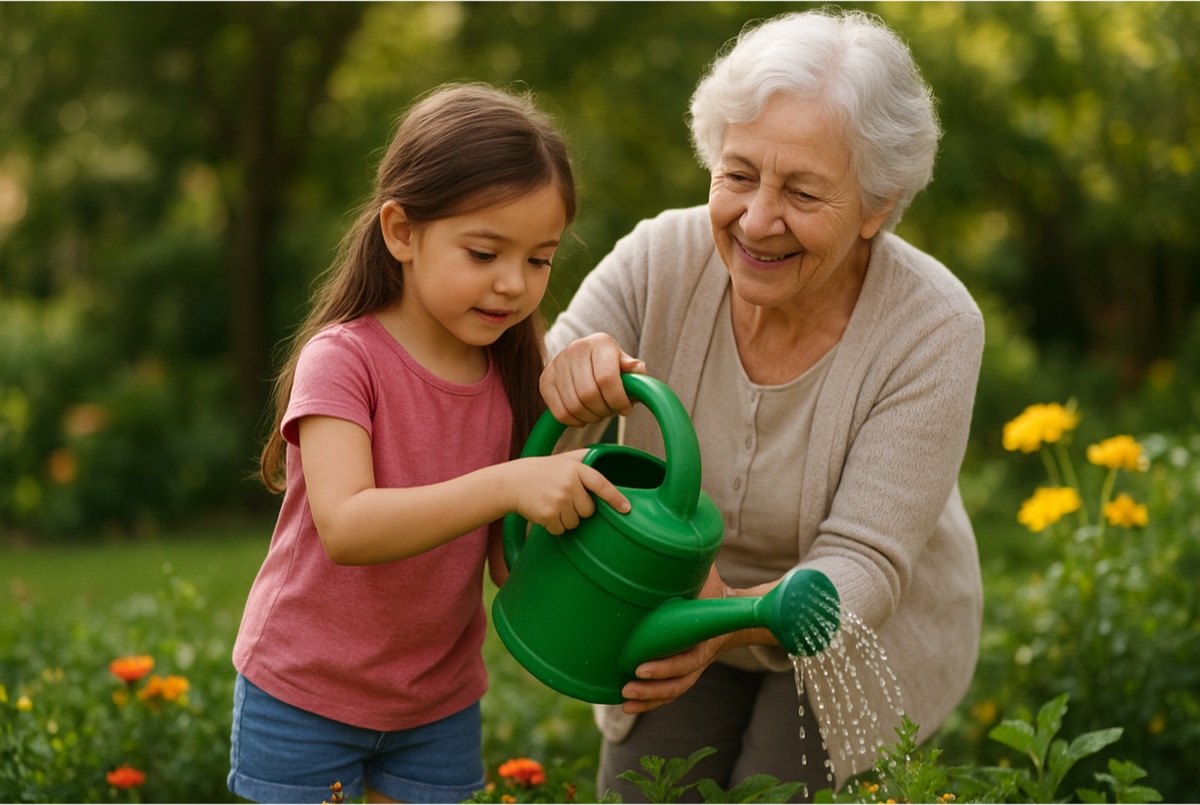
Older people
Applying behavioural principles to support wellbeing, independence and meaningful engagement in everyday life as we age.

Workplaces & teams
Using behavioural science to improve performance, motivation and wellbeing while building more positive, and supportive workplace cultures.

Everyday life
A behavioural approach to managing difficult thoughts and feelings, and living a more meaningful, values-based life.
Recommended reading
A few books to get you started. These books offer accessible introductions to behavioural science and practical ways to apply it in different settings. They’re a starting point, not an exhaustive list.
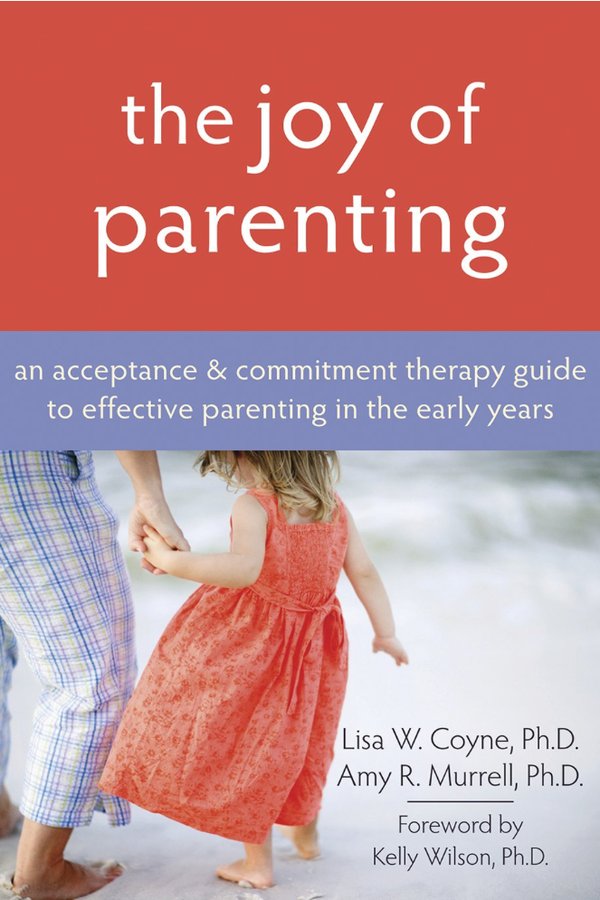
The Joy of Parenting
Lisa W. Coyne PhD and Amy R. Murrell PhD
Practical approaches to understanding children’s behaviour and building positive relationships.
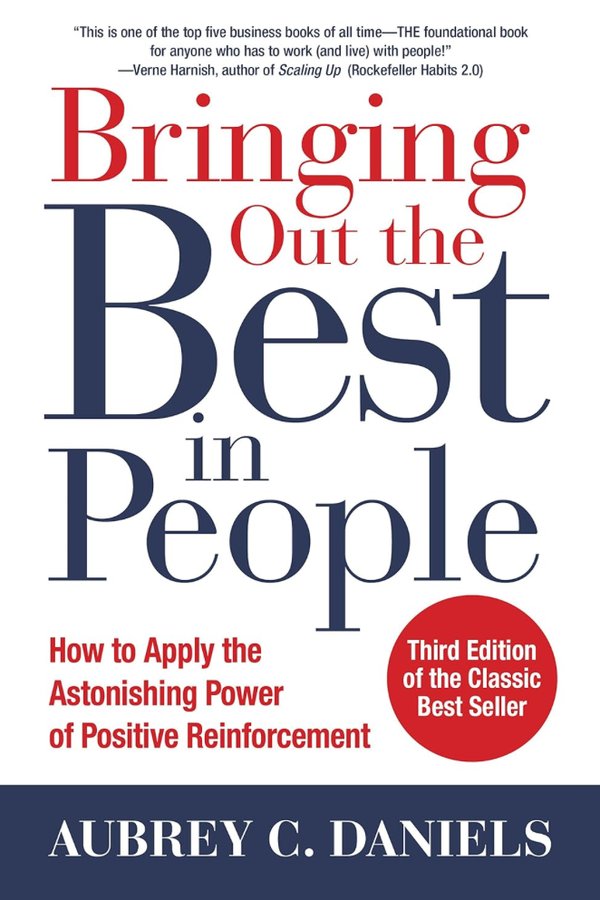
Bringing Out the Best in People
Aubrey C. Daniels
Practical applications of behavioural principles to performance, motivation and workplace relationships.
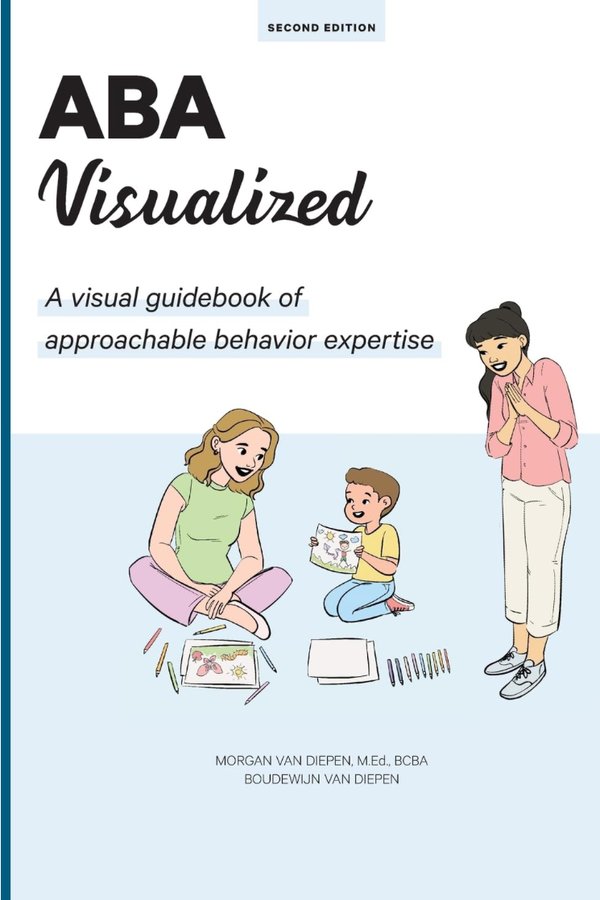
ABA Visualized (2nd edition)
Morgan van Diepen & Boudewijn van Diepen
An interactive training tool for teaching behaviour strategies.
Skybound Learning offers evidence-based online courses for professionals, therapists and families, including two free courses: Building Positive Relationships and Understanding Reinforcement and Learning.